
Gas line directional drilling
We bore the path for the gas line under the patio, the drive or the landscaping. Your plumbing or HVAC crew sizes the pipe, joins it, tests it and connects it.
Request a quote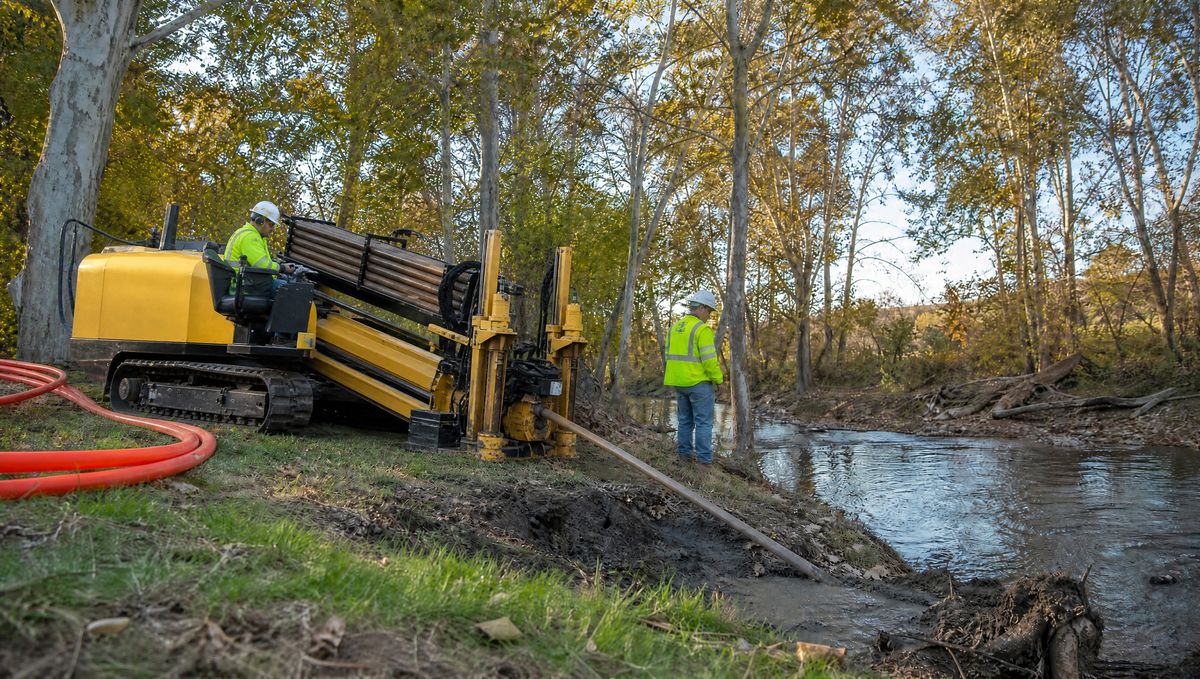
What we bore
- Meter relocations
- Gas service replacements
- Outdoor kitchens and fire features
- Generator fuel feeds
- Commercial upgrades
Benefits
- Precision bores
- Clean entry and exit points
- Zero surface destruction
How a bore goes
Send the address and scope
Give us the address, whether the gas is natural gas or propane, the approximate load, the route and the distance. Tell us where the meter and the appliance sit and who supplies the pipe.
We handle locates and planning
We place the 811 ticket, arrange a private locate for the lines 811 does not mark, and plan the bore. Good practice exposes every crossing and tie-in point, by vacuum excavation where it is available, before the bit goes near it, and sewer laterals get special handling.
Directional bore completed
A tracked pilot bore and a reamer sized for your pipe or conduit, with the tracer wire kept beside the pipe, not wrapped around it. The depth is recorded along the route. [to confirm: whether Warwood pulls bare gas pipe or only a conduit the trade pulls pipe through]
You pull and connect your line
Your crew makes the joints, pressure-tests the line and connects it, and your local inspector signs off where the jurisdiction asks for it. We coordinate the timing with you.
Final restoration and cleanup
The pits and potholes are filled, the slurry is hauled off and the turf is back. If the gas utility is moving or setting a meter, the site stays graded and clear for its crew.
What to send us
Start with the address, the line type, the distance and the preferred route. Say whether the job is a generator feed, an outdoor kitchen or fire feature, a feed to a detached building, a commercial upgrade or a meter relocation, because each one has different paperwork.
Gas lines past the meter belong to the property owner, and 811 members do not mark them. A propane line from a storage tank is private too. Tell us if a tank or an older line might be in the yard, and book the 811 ticket two full working days ahead.
- The address, the gas type and the approximate load
- Where the meter and the appliance sit, and the route between them
- Who supplies the pipe, who pulls it, who joins it and who pressure-tests it
- Whether the sewer laterals on the property have been located or scoped
- The local permit, which the plumbing or HVAC contractor pulls
Details
Who owns which part of the line
The gas utility installs, owns and maintains the line from the main to the meter. In Marion County and Westfield that utility is Citizens Energy Group, and in much of the surrounding counties it is CenterPoint Energy. Everything past the meter belongs to the owner and goes in through a licensed contractor.
That split decides who does what. A yard line, a generator feed or a feed to an outdoor kitchen is a customer-side line. A meter relocation or a gas service replacement touches both sides: the utility owns the line from the main to the meter, and the heating or plumbing contractor installs the line past it. We bore the path for the customer-side run, and we work to the utility's rules where its line is involved. [to confirm: how Warwood scopes meter relocations and gas service replacements, and whether it also works as a subcontractor to a gas utility]
Pipe, tracer wire and depth
Plastic gas pipe is allowed outdoors underground, and the state's fuel gas code calls for a yellow insulated copper tracer wire, 18 gauge or heavier, beside it so the line can be found later. Underground connections between metal and plastic use transition fittings made for the purpose. The pipe comes up through a factory riser, never as bare plastic above ground.
Federal pipeline rules set a service line's cover at 12 inches on private property and 18 inches in a street. The state code sets 12 inches for customer-side piping, and allows 8 inches for an individual line to an outdoor appliance when it is approved and protected. A bore under a driveway or patio is deeper than either number. We bore to the depth your plan and your inspector set. [to confirm: Warwood's typical bore depth and its minimum cover under a driveway]
Avoiding a cross bore
A cross bore is a bored line that passes through an existing sewer lateral. Nothing shows at the time. Years later a drain-cleaning cutter can sever the gas line, and gas can then travel along the sewer into the building. Private laterals are not marked through 811, and old ones are often shallow.
The industry guideline for preventing it calls for a camera inspection that locates every lateral on the path before drilling, depth measured in the field instead of copied from old maps, potholing wherever depth or location cannot be proven, a second camera run after the bore, and recorded video and depth records handed to the contractor. Ask any boring subcontractor for a written bore plan, proof that the laterals were located, the post-bore video and the as-built depths. [to confirm: Warwood's cross-bore procedure, the lateral camera it owns or partners with, and who pays for the camera work]
Permits and who does what
Customer-side gas piping needs a local permit and an inspection, and the plumbing or HVAC contractor pulls the permit. In Indianapolis a licensed contractor in each craft pulls the permits. Which craft covers outdoor gas piping is a question for the building department, so ask before the job is scheduled.
A bore under a public road or inside a right-of-way needs a county or city permit as well. We bore and coordinate the timing, and your crew handles the gas work and the test.
Questions
Do you do meter relocations and gas service replacements?
Both involve the utility's line from the main to the meter, which the utility installs and owns, and the customer-side line past it, which the heating or plumbing contractor installs. We bore the path for the customer-side run and work with the utility where its line is involved. [to confirm: how Warwood scopes meter relocations and gas service replacements, and whether it works as a subcontractor to a gas utility]
Can you bore a yard line for a generator, an outdoor kitchen or a fire feature?
Yes, that is a regular use. Say who supplies and pulls the pipe, who joins and tests it, and that your crew pulls the permit. A standby generator is a large load, so your plumber sizes the line to it.
How do you avoid a cross bore?
Good practice is to locate and verify sewer laterals, expose every crossing, keep depth records and recommend a camera run before and after the bore. The details are above. [to confirm: Warwood's own cross-bore steps]
What tracer wire and depth do you leave?
Plastic gas pipe gets a yellow insulated tracer wire beside it, accessible or brought above ground at each end. The depth follows your plan and your inspector, and it is deeper than the code minimum under a drive or a patio.
Who pulls the permit and who inspects?
Your plumbing or HVAC contractor pulls the permit and the local building department inspects. We do not pull a fuel gas permit.
Does 811 mark a gas line past the meter?
Not as a rule. Lines past the meter are the owner's, and propane lines from a tank are private. Plan a private locate and tell us what might be in the yard.
What do you need from me before you drill?
The address, the gas type, the distance, the route, where the meter and appliance sit, who supplies the pipe, a clear path for the rig and the 811 ticket two full working days ahead.
How long does it take?
The bore is usually short. The utility and the permit set the schedule, and the meter is set after your inside piping and an appliance are ready. [to confirm: Warwood's typical field time for a customer-side gas bore]